

Finding out you’re expecting is a profound moment. Your heart fills with a joy that is both thrilling and overwhelming. We understand you might be looking for guidance that cares for your whole self, body and soul. At HealthToLife, we believe that your faith and your physical well-being walk hand in hand.
This guide is here to support you. We offer practical first-trimester tips at home woven with Islamic principles. Think of it as a trusted friend sharing Muslim women’s health secrets for a peaceful and healthy start to your journey.
Table of Contents
- Why Many Muslim Women Keep the First Trimester a Secret
- Your Body's Changes: A Spiritual Perspective
- The Muslimah's First Trimester Morning Routine
- Nourishment from Two Plates: Physical and Spiritual Nutrition
- The Power of Dua: Your Spiritual Anchor
- Staying Active and Rested at Home
- Preparing Your Home and Heart
- When to Seek Medical Help
- Conclusion: Embracing Your Journey with Faith
- References and Further Reading
- Frequently Asked Questions
Why Many Muslim Women Keep the First Trimester a Secret
Many cultures and Muslim families practice keeping a pregnancy private initially. This isn’t about secrecy. It’s about protection. The first trimester carries the highest risk for miscarriage. Sharing the news later helps guard your heart.
It gives you and your partner a sacred space to process this change without external pressure. You can focus on your well-being and make personal Duas. This quiet period is a special time for spiritual reflection and connection before sharing your happy news with the world.
Your Body’s Changes: A Spiritual Perspective
View common symptoms as part of a profound, natural process. Your fatigue is your body working hard to create new life. Morning sickness can be a reminder to slow down and practice patience. This perspective, rooted in Islamic thought, transforms physical challenges into acts of worship and draws you closer to the miracle happening within you.
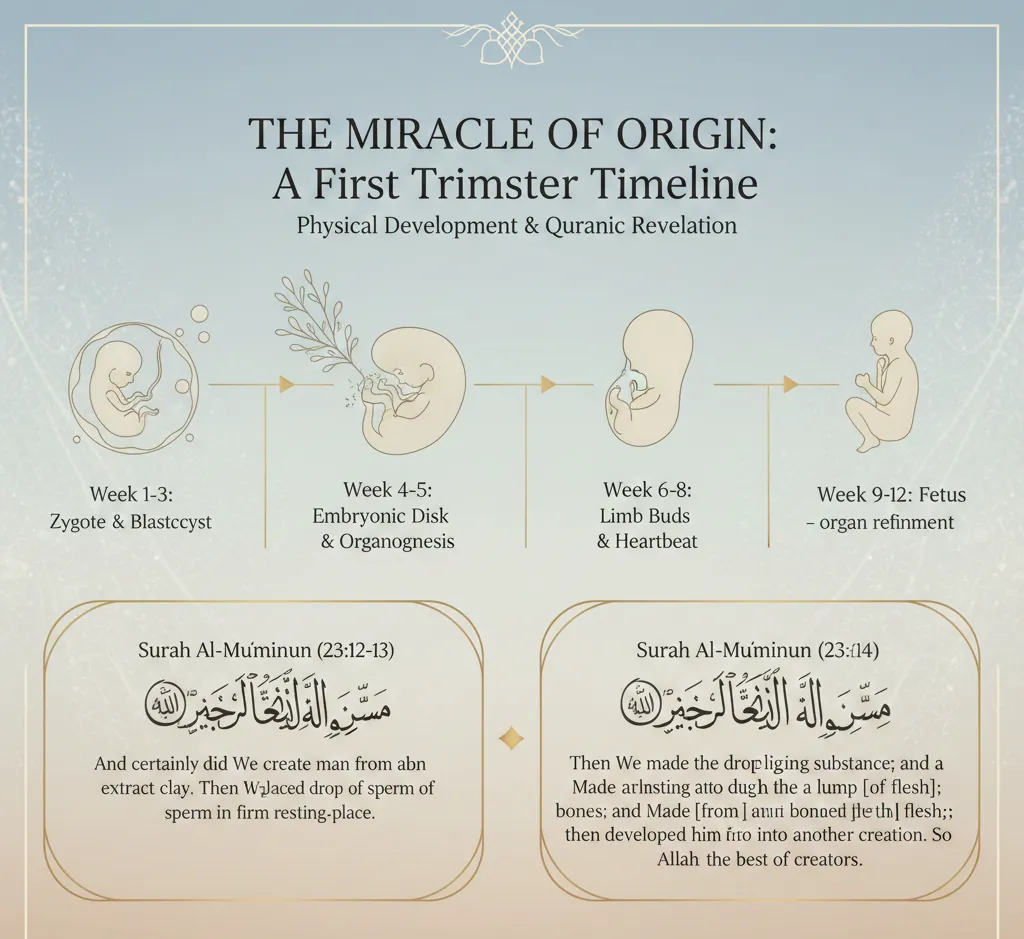
It’s easy to feel frustrated by constant tiredness or nausea. But in Islam, your body is a trust from God. These changes are not punishments. They are signs of the incredible creation He has placed in your care. Every part of this journey has a purpose and a potential for spiritual reward.
The Muslimah’s First Trimester Morning Routine
A supportive routine starts slowly. Begin with the Dua for waking up and sip water with lemon to settle your stomach. Follow with a shortened, seated prayer if fatigue is strong. Then, eat a light, nutritious breakfast like dates and yoghurt. This gentle sequence manages morning sickness while centring your day on faith, forming a perfect core of your first trimester health tips.
This routine is a framework, not a strict rule. Listen to what your body needs each day. The goal is to build a sustainable habit that supports both your physical and spiritual well-being. This approach turns your daily Muslim woman’s morning routine into a source of strength and comfort during these sensitive early weeks.
Nourishment from Two Plates: Physical and Spiritual Nutrition

Focus on gentle, frequent meals and Quranic foods. Eat small portions of plain foods like dry toast or crackers to manage nausea. Incorporate blessed foods like dates, olives, and yoghurt for their proven nutritional benefits. This approach cares for your body while honouring the Sunnah, providing balanced physical and spiritual nourishment for you and your baby.
Think of your diet as two plates. One holds the proteins and vitamins your body needs. The other holds the blessings of reciting ‘Bismillah’ and the spiritual benefits of Prophetic foods. Drinking plenty of water and taking a prenatal vitamin with folic acid, as recommended by the Worhttps://www.who.int/ld Health Organisation, completes this holistic approach to your well-being.
The Power of Dua: Your Spiritual Anchor
Duas provide spiritual comfort and strength throughout your pregnancy. They are a direct line to Allah for seeking a healthy baby, a smooth delivery, and protection from harm. Reciting specific prayers from the Quran and Sunnah can calm your anxieties and fill your heart with peace, making them a vital part of your daily routine as an expectant mother.
You don’t need to memorise long verses. Short, powerful supplications are deeply effective. Consistently ask for well-being and recite Surah Al-Fatiha. As highlighted by Islamic Relief UK, seeking refuge with the words of Allah is a form of divine protection. This practice turns moments of worry into opportunities for connection and trust.
Staying Active and Rested at Home
Yes, gentle movement is both safe and beneficial. Short, low-impact activities like walking or simple stretching can boost your energy and improve your mood. The key is to listen to your body and balance this activity with plenty of rest, treating sleep as an important part of your prenatal care for a healthy pregnancy.
Forget intense workouts. Focus on staying mobile. A 10-minute walk indoors can ease stiffness. Gentle prenatal yoga poses can help with lower back tension. Remember, your body is doing the profound work of creating life. Honouring your need for rest is not laziness; it is a wise and necessary part of caring for yourself and your growing baby.
Preparing Your Home and Heart
Start by fostering a calm and positive atmosphere. This involves keeping your living space tidy to reduce stress and actively sharing your feelings with your partner. Building this foundation of open communication and a peaceful home directly supports your emotional and physical well-being during these early weeks of pregnancy.
Your home is your sanctuary. Play soothing recitations of the Quran to fill the space with tranquillity. Discuss your hopes and any worries with your husband. This teamwork strengthens your bond as you prepare for this new chapter together. At healthtolife.in, we believe a nurturing environment is one of the most valuable Muslim women’s health secrets for a smooth first trimester.
When to Seek Medical Help
You should contact your doctor for severe symptoms like heavy bleeding, intense abdominal pain, or persistent dizziness. Attending your scheduled prenatal appointments is also crucial. Seeking professional medical care is a responsible action that aligns with the Islamic principle of preserving your health and the well-being of your child.
Do not hesitate to ask for help. Trust your instincts about your body. The Saudi Ministry of Health and other global health bodies stress the importance of early and regular prenatal check-ups. These visits monitor your baby’s development and are a key part of a healthy pregnancy. Combining expert medical care with your spiritual practices offers the most complete protection.
Conclusion: Embracing Your Journey with Faith
Your first trimester is a unique time of transformation. It blends physical changes with deep spiritual growth. By integrating these practical first-trimester tips at home with the strength of your faith, you build a solid foundation. Remember the Muslim women’s health secrets we’ve shared: listen to your body, trust in your faith, and seek support when needed.
We at healthtolife.in are here to walk with you. Your journey into motherhood is a blessed path. Embrace each day with patience and a heart full of hope.
References and Further Reading
This article is based on verified information from respected health authorities, including the World Health Organisation (WHO) and safeena.org. Every fact is carefully checked to ensure accuracy and trustworthiness.
For research-backed insights on health, disease prevention, nutrition, and wellness from an Islamic perspective, explore our Health & Islam article library.
At HealthToLife, our mission is simple: to provide safe, practical, and easy-to-understand health information. Your well-being is our top priority, and our team regularly reviews the latest research to ensure our content remains up-to-date.
If this article helped you, we’d love to hear your thoughts in the comments. Thank you for trusting HealthToLife as your guide to holistic health and wellness.
Frequently Asked Questions
Ques-1. How to keep pregnancy a secret in the first trimester?
Ans: Keep your routine normal and have polite, pre-planned responses. Wear your usual clothing and delegate tasks that might cause suspicion, like refusing raw food. If offered something you can’t have, a simple “No, thank you, I’m not in the mood for that today” is often enough. This strategy helps you maintain your privacy comfortably and peacefully.
Trust your partner as your main confidant. This shared secret can strengthen your bond. Use this private time for personal reflection and quiet Duas. It is your special period to connect with the pregnancy before the wider celebrations begin.
Ques-2. What are 5 things a female should do while pregnant?
Ans: Attend all prenatal check-ups, take prescribed prenatal vitamins, stay hydrated with plenty of water, eat nutritious, small meals, and incorporate gentle movement like walking into your routine. These five actions form a strong foundation for a healthy pregnancy for both mother and baby, blending essential medical care with practical daily habits.
Beyond the physical, remember your spiritual and emotional needs. Recite the Quran and make Dua for your child’s well-being. Get adequate rest and communicate openly with your support system. A holistic approach cares for your entire being.
Ques-3. What is the golden rule for every pregnant woman?
Ans: The golden rule is to listen to your body. Your body will give you signals for what it needs, whether it’s more rest, different food, or less activity. Honouring these signals is an act of self-care and wisdom. This principle helps you navigate both the physical and emotional changes of pregnancy with greater confidence and grace.
This means prioritising your well-being without guilt. If you are tired, rest. If a food doesn’t appeal to you, don’t force it. Trusting this inner guidance is one of the most valuable Muslim women’s health secrets for a balanced and peaceful journey.
Ques-4. How to help my wife in 1st trimester?
Ans: Your most important role is to provide practical and emotional support. Take over more household chores, especially cooking and cleaning, to allow her to rest. Be patient and understanding with her mood swings and fatigue. Accompany her to doctor’s appointments and learn about the changes she is experiencing to be a more informed partner.
Your support is a form of love and protection. Offer to bring her water and plain snacks to manage nausea. Most importantly, listen to her without judgment and make Dua for her and your child. This active care strengthens your partnership during this transformative time.
Related Video | Diet Tips for a Healthy Pregnancy
Was this article helpful?